
វត្ថុបំណង
1. អនុវត្តន៍ក្នុងការគណនាតម្លៃបរមា
លំហាត់គំរូ 1 : កសិករម្នាក់ចង់ធ្វើរបងហ៊ុមព័ទ្ធចម្ការមួយដែលមានរាងជាចតុកោណកែងដែលមានបរិមាត្រស្មើនឹង \(\displaystyle 400\text{ m}\) ។
- ក. ចូរគណនាផ្ទៃក្រឡាចម្ការនេះជាអនុគមន៍នៃ \(\displaystyle x\)
- ខ. កំណត់តម្លៃ \(\displaystyle x\) និង \(\displaystyle y\) ដើម្បីឱ្យផ្ទៃក្រឡាចម្ការនេះមានតម្លៃធំបំផុត ។
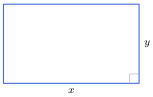
ដំណោះស្រាយ :
- ក.
គណនាផ្ទៃក្រឡាចម្ការជាអនុគមន៍នៃ \(\displaystyle x\)
ដោយចម្ការនេះមានរាងជាចតុកោណកែងគេបានផ្ទៃក្រឡាចម្ការគឺ \(\displaystyle xy\) ដោយបរិមាត្រចម្ការស្មើនឹង \(\displaystyle 400\text{ m}\) នាំឱ្យ \(\displaystyle 2x + 2y = 400\) សមមូល \(\displaystyle x + y = 200 \implies y = 200 - x\) នោះគេបាន \(\displaystyle xy = x(200 - x) = 200x - x^2\) ដូច្នេះ ផ្ទៃក្រឡាចម្ការជាអនុគមន៍នៃ \(\displaystyle x\) គឺ \(\displaystyle A(x) = 200x - x^2\) ។
- ខ.
កំណត់តម្លៃ \(\displaystyle x\) និង \(\displaystyle y\) ដើម្បីឱ្យផ្ទៃក្រឡាចម្ការនេះមានតម្លៃធំបំផុត
គេមាន \(\displaystyle A(x) = 200x - x^2\) នោះគេបាន \(\displaystyle A'(x) = (200x - x^2)' = 200 - 2x\) ឱ្យ \(\displaystyle A'(x) = 0\) សមមូល \(\displaystyle 200 - 2x = 0 \iff x = 100\) ។
តារាងអថេរភាព
\(\displaystyle x\) \(\displaystyle 0\) \(\displaystyle 100\) \(\displaystyle 200\) \(\displaystyle A'(x)\) \(\displaystyle +\) \(\displaystyle 0\) \(\displaystyle -\) \(\displaystyle A(x)\) \(\displaystyle \nearrow\) អតិបរមា \(\displaystyle \searrow\) ផ្ទៃក្រឡាចម្ការមានតម្លៃអតិបរមា លុះត្រាតែ \(\displaystyle x = 100\) តាម \(\displaystyle y = 200 - x\) គេបាន \(\displaystyle y = 200 - 100 = 100\) ។
ដូច្នេះ ដើម្បីឱ្យផ្ទៃក្រឡាចម្ការមានតម្លៃធំបំផុត លុះត្រាតែ \(\displaystyle x = 100\text{ m}\), \(\displaystyle y = 100\text{ m}\) ។
លំហាត់គំរូ 2 : គេចង់ធ្វើប្រអប់បើកមួយពីក្រដាសកាតុងដែលមានរាងចតុកោណកែងដោយកាត់ការេតូចៗនៅត្រង់មុំកែងចេញ (ដូចរូប) ។ គេដឹងថាបណ្តោយ \(\displaystyle 8\text{ dm}\) និងទទឹង \(\displaystyle 3\text{ dm}\) ។
- ក. ចូរគណនាមាឌនៃប្រអប់ជាអនុគមន៍នៃ \(\displaystyle x\)
- ខ. កំណត់តម្លៃ \(\displaystyle x\) ដើម្បីឱ្យប្រអប់មានមាឌអតិបរមា រួចគណនាមាឌអតិបរមានោះ ។
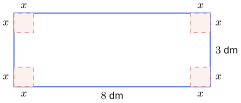
ដំណោះស្រាយ :
- ក.
គណនាមាឌនៃប្រអប់ជាអនុគមន៍នៃ \(\displaystyle x\)
ដើម្បីធ្វើប្រអប់បានលុះត្រាតែ \(\displaystyle 0 < 2x < 3\) សមមូល \(\displaystyle 0 < x < 1.5\) ។ ដោយប្រអប់បើកមានរាងជាប្រលេពីប៉ែតកែង គេបាន មាឌប្រអប់គឺ
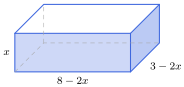
\(\displaystyle V(x) = (8 - 2x)(3 - 2x)x = (8 - 2x)(3x - 2x^2) = 24x - 16x^2 - 6x^2 + 4x^3 = 4x^3 - 22x^2 + 24x\) ។ ដូច្នេះ មាឌនៃប្រអប់គឺ \(\displaystyle V(x) = 4x^3 - 22x^2 + 24x\) ។
- ខ.
កំណត់តម្លៃ \(\displaystyle x\) ដើម្បីឱ្យប្រអប់មានតម្លៃអតិបរមា
គេមាន \(\displaystyle V(x) = 4x^3 - 22x^2 + 24x\) គេបាន \(\displaystyle V'(x) = (4x^3 - 22x^2 + 24x)' = 12x^2 - 44x + 24\) គេឱ្យ \(\displaystyle V'(x) = 0\) សមមូល \(\displaystyle 12x^2 - 44x + 24 = 0 \iff 3x^2 - 11x + 6 = 0 \iff (3x - 2)(x - 3) = 0 \iff x = \dfrac{2}{3},\ x = 3\) ដោយ \(\displaystyle 0 < x < 1.5\) នោះ \(\displaystyle x = 3\) មិនយក ។
តារាងអថេរភាព
\(\displaystyle x\) \(\displaystyle 0\) \(\displaystyle \frac{2}{3}\) \(\displaystyle 1.5\) \(\displaystyle V'(x)\) \(\displaystyle +\) \(\displaystyle 0\) \(\displaystyle -\) \(\displaystyle V(x)\) \(\displaystyle \nearrow\) អតិបរមា \(\displaystyle \searrow\) មាឌអតិបរមា \(\displaystyle V\left(\dfrac{2}{3}\right) = 4\left(\dfrac{2}{3}\right)^3 - 22\left(\dfrac{2}{3}\right)^2 + 24\left(\dfrac{2}{3}\right) = \dfrac{200}{27}\text{ dm}^3\) ដូច្នេះ \(\displaystyle x = \dfrac{2}{3}\text{ dm}\) ដើម្បីឱ្យប្រអប់មានមាឌអតិបរមា និងមាឌអតិបរមាគឺ \(\displaystyle V\left(\dfrac{2}{3}\right) = \dfrac{200}{27}\text{ dm}^3\) ។
លំហាត់គំរូ 3 : ក្រុមហ៊ុនផលិតសម្ភារៈប្រើប្រាស់មួយបានចំណាយប្រាក់ចំនួន \(\displaystyle 2\) ពាន់រៀលសម្រាប់ផលិតសម្ភារៈ \(\displaystyle 1\) គ្រឿង ។ គេដឹងថាបើក្រុមហ៊ុនលក់សម្ភារៈ \(\displaystyle 1\) គ្រឿងតម្លៃ \(\displaystyle 5\) ពាន់រៀល នោះក្នុងមួយខែលក់អស់ \(\displaystyle 4000\) គ្រឿង ។ អ្នកគ្រប់គ្រងក្រុមហ៊ុនបានសង្កេតឃើញថា កាលណាតម្លៃសម្ភារៈកើនឡើងម្តង \(\displaystyle 1\) ពាន់រៀល នោះបរិមាណសម្ភារៈលក់ចេញក្នុង \(\displaystyle 1\) ខែថយចុះម្តង \(\displaystyle 400\) គ្រឿង ។ កំណត់តម្លៃសម្ភារៈ \(\displaystyle 1\) គ្រឿងដែលក្រុមហ៊ុនត្រូវលក់ ដើម្បីទទួលបានប្រាក់ចំណេញជាអតិបរមា ។
ដំណោះស្រាយ : តាង \(\displaystyle x\) ជាតម្លៃលក់សម្ភារៈ \(\displaystyle 1\) គ្រឿងនិង \(\displaystyle P(x)\) ជាអនុគមន៍ប្រាក់ចំណេញសរុប ។ ប្រាក់ចំណេញសរុប \(\displaystyle = (\text{ប្រាក់ចំណេញក្នុង } 1\text{ គ្រឿង}) \times (\text{បរិមាណសម្ភារៈ})\) តាមសម្មតិកម្ម គេបានប្រាក់ចំណេញក្នុង \(\displaystyle 1\) គ្រឿង \(\displaystyle = x - 2\) ពាន់រៀល ។
- បើលក់ \(\displaystyle 5\) ពាន់រៀលក្នុងមួយគ្រឿងនោះបរិមាណលក់ \(\displaystyle 4000\) គ្រឿងក្នុងមួយខែ
- បើលក់ \(\displaystyle 6\) ពាន់រៀលក្នុងមួយគ្រឿងនោះបរិមាណលក់ \(\displaystyle 4000 - 400(6 - 5)\) គ្រឿងក្នុងមួយខែ
- បើលក់ \(\displaystyle 7\) ពាន់រៀលក្នុងមួយគ្រឿងនោះបរិមាណលក់ \(\displaystyle 4000 - 400(7 - 5)\) គ្រឿងក្នុងមួយខែ
- …
- បើលក់ \(\displaystyle x\) ពាន់រៀលក្នុងមួយគ្រឿងនោះបរិមាណលក់ \(\displaystyle 4000 - 400(x - 5)\) គ្រឿងក្នុងមួយខែ
គេបាន \(\displaystyle P(x) = (x - 2)[4000 - 400(x - 5)] = 400(x - 2)(10 - x + 5) = 400(x - 2)(15 - x)\) \(\displaystyle P'(x) = 400(15 - x) - 400(x - 2) = 400(15 - x - x + 2) = 400(17 - 2x)\) ។ \(\displaystyle P'(x) = 0\) សមមូល \(\displaystyle 17 - 2x = 0\) នាំឱ្យ \(\displaystyle x = \dfrac{17}{2} = 8.5\) ។
តារាងអថេរភាព
| \(\displaystyle x\) | \(\displaystyle 8.5\) | ||
| \(\displaystyle P'(x)\) | \(\displaystyle +\) | \(\displaystyle 0\) | \(\displaystyle -\) |
| \(\displaystyle P(x)\) | \(\displaystyle \nearrow\) | អតិបរមា | \(\displaystyle \searrow\) |
\(\displaystyle P(8.5) = 400(8.5 - 2)(15 - 8.5) = 16900\) ពាន់រៀល ។ ដូច្នេះ ដើម្បីឱ្យក្រុមហ៊ុនចំណេញបានជាអតិបរមាចំនួន \(\displaystyle 16900\) ពាន់រៀល ក្រុមហ៊ុនត្រូវលក់សម្ភារៈ \(\displaystyle 1\) គ្រឿងតម្លៃ \(\displaystyle 8500\text{ ៛}\) ។
ប្រតិបត្តិ : គេយកស័ង្កសីមួយផ្ទាំងមានរាងជាចតុកោណកែងមានបណ្តោយ \(\displaystyle 180\text{ cm}\) និងទទឹង \(\displaystyle 120\text{ cm}\) មកធ្វើហិបមួយរាងប្រលេពីប៉ែតកែងដែលគ្មានគម្រប ។ តើគេត្រូវធ្វើហិបនោះកម្ពស់ប៉ុន្មាន ដើម្បីឱ្យហិបនោះមានមាឌអតិបរមា ?
ចម្លើយ : កម្ពស់ស្មើនឹង \(\displaystyle 10(5 - \sqrt{7})\text{ cm}\) ដើម្បីឱ្យមាឌហិបអតិបរមា ។
2. អត្រាបម្រែបម្រួល
ឧទាហរណ៍ 1 : គេបង្ហូរទឹកចេញពីធុងរាងស៊ីឡាំងដែលបាតមានកាំស្មើនឹង \(\displaystyle 20\text{ cm}\) ដោយអត្រា \(\displaystyle 2.5\text{ L/s}\) និងចាក់ទឹកចូលដោយអត្រា \(\displaystyle 2\text{ L/s}\) (មើលរូប) ។ តើកម្រិតទឹកក្នុងធុងប្រែប្រួលដោយអត្រាប៉ុន្មាន ?
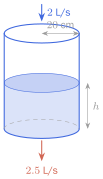
តាង \(\displaystyle h\ (\text{cm})\) ជាជម្រៅទឹកក្នុងរយៈពេល \(\displaystyle t\ (\text{s})\) អត្រាបម្រែបម្រួលមាឌទឹក \(\displaystyle V\ (\text{cm}^3)\) គឺ \(\displaystyle \dfrac{dV}{dt} = 2000 - 2500 = -500\text{ cm}^3/\text{s}\) ដោយ \(\displaystyle 1\text{ L} = 1000\text{ cm}^3\) ដូច្នេះទឹកចាក់ចូលមានមាឌ \(\displaystyle 2000\text{ cm}^3\) និងទឹកបង្ហូរចេញមានមាឌ \(\displaystyle 2500\text{ cm}^3\) ក្នុងមួយវិនាទី ។ បម្រែបម្រួលកម្រិតទឹកគឺ \(\displaystyle \dfrac{dh}{dt}\) នោះគេបាន \(\displaystyle \dfrac{dv}{dt} = \dfrac{dv}{dh} \times \dfrac{dh}{dt}\) ដោយ \(\displaystyle V = \pi r^2 h\) នោះគេបាន \(\displaystyle \dfrac{dv}{dh} = \pi r^2 = 400\pi\) (ព្រោះ \(\displaystyle r = 20\text{ cm}\)) ដូច្នេះ \(\displaystyle -500 = 400\pi \times \dfrac{dh}{dt}\) នាំឱ្យ \(\displaystyle \dfrac{dh}{dt} = -\dfrac{500}{400\pi} = -0.40\text{ cm/s}\) ។ នេះបញ្ជាក់ថា កម្រិតទឹកបានថយចុះក្នុងអត្រា \(\displaystyle 0.40\text{ cm/s}\) ។
ឧទាហរណ៍ 2 : គេដាក់កោនប្រហោងក្នុងមួយឱ្យកំពូលចុះក្រោមតាមអ័ក្សឈរ (មើលរូប) ។ គេចាក់អង្គធាតុរាវបញ្ចូលក្នុងកោន ដោយមានអត្រាថេរ \(\displaystyle 20\text{ cm}^3/\text{s}\) ប៉ុន្តែហូរចេញវិញតាមប្រហោងតូចត្រង់កំពូលកោន ដោយមានអត្រាថេរ \(\displaystyle 15\text{ cm}^3/\text{s}\) ។ តើជម្រៅអង្គធាតុរាវក្នុងកោនប្រែប្រួលដោយអត្រាប៉ុន្មាន បើទឹកមានកម្ពស់ \(\displaystyle 12\text{ cm}\) ?
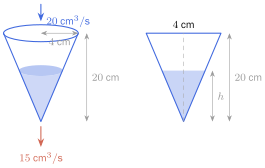
បើ \(\displaystyle V\ (\text{cm}^3)\) ជាមាឌអង្គធាតុរាវនៅក្នុងកោនក្នុងរយៈពេល \(\displaystyle t\ (\text{s})\) គេបាន \(\displaystyle \dfrac{dv}{dt} = 20 - 15 = 5\text{ cm}^3/\text{s}\) តាង \(\displaystyle h\ (\text{cm})\) ជាកម្ពស់អង្គធាតុរាវក្នុងរយៈពេល \(\displaystyle t\ (\text{s})\) គេត្រូវរក \(\displaystyle \dfrac{dh}{dt}\) គេបាន \(\displaystyle \dfrac{dh}{dt}\) តាម \(\displaystyle \dfrac{dv}{dt} = \dfrac{dv}{dh} \times \dfrac{dh}{dt}\) ដូច្នេះ គេត្រូវរកទំនាក់ទំនងរវាង \(\displaystyle v\) និង \(\displaystyle h\) ។ យក \(\displaystyle r\) ជាកាំមុខកាត់នៃផ្ទៃអង្គធាតុរាវពាសពីលើ គេបាន \(\displaystyle \tan\theta = \dfrac{4}{20} = \dfrac{r}{h}\) នោះ \(\displaystyle r = \dfrac{h}{5}\) និង \(\displaystyle v = \dfrac{1}{3}\pi r^2 h = \dfrac{\pi h^3}{75}\) នាំឱ្យ \(\displaystyle \dfrac{dv}{dh} = \dfrac{\pi h^2}{25}\) នោះគេបាន \(\displaystyle \dfrac{dv}{dt} = 5 = \dfrac{\pi \times 12^2}{25} \times \dfrac{dh}{dt}\) នាំឱ្យ \(\displaystyle \dfrac{dh}{dt} = \dfrac{25 \times 5}{\pi \times 144} = 0.28\text{ cm/s}\) ដូច្នេះ ជម្រៅអង្គធាតុរាវគឺកើនបានក្នុងអត្រា \(\displaystyle 0.28\text{ cm/s}\) ។
តាមឧទាហរណ៍ 2 គេកត់សម្គាល់ឃើញថាអត្រាបម្រែបម្រួលនៃជម្រៅអាស្រ័យអង្គធាតុរាវដែលមានរួចហើយនៅក្នុងកោន កាលណាមុខកាត់មិនថេរ ។
ប្រតិបត្តិ : ផ្ទៃរង្វង់មួយបានថយចុះដោយអត្រា \(\displaystyle 2\text{ cm}^2/\text{s}\) ។ តើកាំរង្វង់ថយចុះដោយអត្រាប៉ុន្មានកាលណាផ្ទៃរង្វង់ស្មើនឹង \(\displaystyle 9\pi\text{ cm}^2\) ។
ចម្លើយ : \(\displaystyle \dfrac{dr}{dt} = -\dfrac{1}{3\pi} \approx -0.106\text{ cm/s}\) (កាំរង្វង់ថយចុះដោយអត្រា \(\displaystyle \dfrac{1}{3\pi} \approx 0.106\text{ cm/s}\)) ។
3. ល្បឿននិងសំទុះនៃចលនា
3.1. ល្បឿននៃចលនា
និយមន័យ : ល្បឿននៃចលនាមួយនៅខណៈ \(\displaystyle t\) គឺ \(\displaystyle V(t) = S'(t) = \dfrac{dS}{dt}\) ដែល \(\displaystyle S(t)\) ជាចម្ងាយចរនៅខណៈ \(\displaystyle t\) ។
លំហាត់គំរូ : គេទម្លាក់វត្ថុមួយដោយសេរីពីយន្តហោះ ដែលខណៈ \(\displaystyle t\) វិនាទី វត្ថុនោះធ្លាក់បានចម្ងាយ \(\displaystyle S(t) = 16t^2\ (\text{m})\) ។ កំណត់ល្បឿននៃវត្ថុខណៈពេល \(\displaystyle t = 3\) វិនាទី ។
ដំណោះស្រាយ : គេបាន \(\displaystyle V(t) = \dfrac{dS}{dt} = S'(t) = 32t\), \(\displaystyle V(3) = 32 \times 3\) ដូច្នេះ ល្បឿននៃវត្ថុខណៈពេល \(\displaystyle t = 3\text{ s}\) គឺ \(\displaystyle 96\text{ m/s}\) ។
ប្រតិបត្តិ : កីឡាករម្នាក់លោតទឹកពីកម្ពស់ \(\displaystyle 3.2\text{ m}\) ។ ទីតាំងនៃកីឡាករនៅខណៈពេល \(\displaystyle t\) វិនាទីឱ្យតាមអនុគមន៍ \(\displaystyle S(t) = -1.6t^2 + 1.6t + 3.2\) (\(\displaystyle S\) គិតជា \(\displaystyle \text{m}\)) ។
- ក. កំណត់រយៈពេលដែលកីឡាករធ្លាក់ដល់ទឹក
- ខ. រកល្បឿនរបស់កីឡាករនៅខណៈពេលនោះ ។
ចម្លើយ : ក. \(\displaystyle t = 2\text{ s}\) ខ. \(\displaystyle V(2) = -4.8\text{ m/s}\) ។
3.2. សំទុះនៃចលនា
ឧទាហរណ៍ : រថយន្តមួយចាប់ផ្តើមផ្លាស់ទីដោយល្បឿន \(\displaystyle V\) បន្ទាប់ពីរយៈពេល \(\displaystyle t\) វិនាទី ក្រោយមកគេបាន \(\displaystyle V\) ជាអនុគមន៍ \(\displaystyle t\) គឺ \(\displaystyle V(t)\) ។ សំទុះនៃរថយន្តពីខណៈ \(\displaystyle t\) ទៅ \(\displaystyle t + \Delta t\) កំណត់តាងដោយ \(\displaystyle \dfrac{\Delta V}{\Delta t} = \dfrac{V(t + \Delta t) - V(t)}{\Delta t}\) ។ បើ \(\displaystyle \Delta(t) \to 0\) នោះ \(\displaystyle \lim_{\Delta t \to 0} \dfrac{\Delta V}{\Delta t} = \lim_{\Delta t \to 0} \dfrac{V(t + \Delta t) - V(t)}{\Delta t} = V'(t)\) \(\displaystyle V'(t)\) ហៅថា សំទុះនៃចលនាមួយនៅខណៈ \(\displaystyle t\) តាងដោយ \(\displaystyle a(t)\) ។
សំទុះនៃចលនានៅខណៈ \(\displaystyle t\) គឺ \(\displaystyle a(t) = \dfrac{dV}{dt} = V'(t)\) ដែល \(\displaystyle V(t)\) ជាល្បឿននៃចលនានៅខណៈ \(\displaystyle t\) ។
លំហាត់គំរូ : រថយន្តមួយផ្តើមចេញដំណើរដោយល្បឿនដែលបកស្រាយដោយអនុគមន៍ \(\displaystyle V(t) = \dfrac{80t}{t + 5}\text{ m/s}\) ។ គូសតារាងប្រៀបធៀបល្បឿននិងសំទុះរបស់រថយន្តខណៈ \(\displaystyle t = 0\), \(\displaystyle t = 5\), \(\displaystyle t = 10\), \(\displaystyle t = 15\), …, \(\displaystyle t = 60\text{ s}\) ។
ដំណោះស្រាយ : គេមាន \(\displaystyle V(t) = \dfrac{80t}{t + 5}\) គេបាន \(\displaystyle a(t) = V'(t) = \dfrac{80(t + 5) - 80t}{(t + 5)^2} = \dfrac{400}{(t + 5)^2}\) តារាងប្រៀបធៀបល្បឿននិងសំទុះរបស់រថយន្តខណៈពេល \(\displaystyle t\)
| \(\displaystyle t\) | \(\displaystyle 0\) | \(\displaystyle 5\) | \(\displaystyle 10\) | \(\displaystyle 15\) | \(\displaystyle 20\) | \(\displaystyle 25\) | \(\displaystyle 30\) | \(\displaystyle 35\) | \(\displaystyle 40\) | \(\displaystyle 45\) | \(\displaystyle 50\) | \(\displaystyle 55\) | \(\displaystyle 60\) |
| \(\displaystyle V\) | \(\displaystyle 0\) | \(\displaystyle 40\) | \(\displaystyle 53.3\) | \(\displaystyle 60\) | \(\displaystyle 64\) | \(\displaystyle 66.7\) | \(\displaystyle 68.6\) | \(\displaystyle 70\) | \(\displaystyle 71.1\) | \(\displaystyle 72\) | \(\displaystyle 72.7\) | \(\displaystyle 73.3\) | \(\displaystyle 73.8\) |
| \(\displaystyle a\) | \(\displaystyle 16\) | \(\displaystyle 4\) | \(\displaystyle 1.78\) | \(\displaystyle 1\) | \(\displaystyle 0.64\) | \(\displaystyle 0.44\) | \(\displaystyle 0.33\) | \(\displaystyle 0.25\) | \(\displaystyle 0.2\) | \(\displaystyle 0.16\) | \(\displaystyle 0.13\) | \(\displaystyle 0.11\) | \(\displaystyle 0.09\) |
ប្រតិបត្តិ : គេទម្លាក់វត្ថុមួយដោយសេរីពីយន្តហោះ ។ នៅខណៈពេល \(\displaystyle t\) វិនាទី វត្ថុនោះធ្លាក់បានចម្ងាយដោយអនុគមន៍ \(\displaystyle S(t) = 4.905t^2 + 30.94\ (\text{m})\) ។ កំណត់ល្បឿននិងសំទុះនៃវត្ថុខណៈពេល \(\displaystyle t = 2\ (\text{s})\) ។
ចម្លើយ : \(\displaystyle V(2) = 19.620\text{ m/s}\), \(\displaystyle a(2) = 9.810\text{ m/s}^2\) ។
លំហាត់
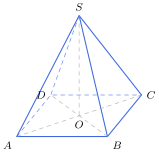
ពីរ៉ាមីតចតុមុខនិយ័ត \(\displaystyle SABCD\) មានផ្ទៃក្រឡាខាង \(\displaystyle S_l\) ។ គណនាផលធៀបរង្វាស់កម្ពស់ \(\displaystyle SO\) និងជ្រុងមួយនៃបាតដើម្បីឱ្យមាឌពីរ៉ាមីតចតុមុខនិយ័តមានតម្លៃអតិបរមា ។
- ផលបូកបរិមាត្រការេមួយនិងរង្វង់មួយមានប្រវែង \(\displaystyle \ell\) ។ គណនាផលធៀបរវាងរង្វាស់កាំរង្វង់និងជ្រុងការេ ដើម្បីឱ្យផលបូកផ្ទៃក្រឡាការេ និងរង្វង់មានតម្លៃអប្បបរមា ។
- ប្រអប់ត្រង់មួយមានគម្របលើនិងបាតក្រោមជាការេ ហើយមានមាឌ \(\displaystyle 250\text{ cm}^3\) ។ សម្ភារៈសម្រាប់ធ្វើគម្របលើ និងបាតក្រោមតម្លៃ \(\displaystyle 2000\text{ ៛/cm}^2\) ហើយសម្ភារៈសម្រាប់ធ្វើផ្ទៃខាងតម្លៃ \(\displaystyle 1000\text{ ៛/cm}^2\) ។ កំណត់រង្វាស់ទ្រនុងនៃប្រអប់ដើម្បីឱ្យប្រាក់ចំណាយលើសម្ភារៈមានតម្លៃអប្បបរមា រួចគណនាប្រាក់ចំណាយអប្បបរមានោះ ។
ទូកមួយចាប់ផ្តើមចេញដំណើរពីចំណុចត្រួតពិនិត្យ ដែលរយៈពេល \(\displaystyle t\) នាទីក្រោយមក ទូកនោះមានចម្ងាយពីចំណុចត្រួតពិនិត្យដែលតាងដោយអនុគមន៍ \(\displaystyle S(t) = t^3 + 60t\) គិតជាម៉ែត្រ ។
- ក. រកល្បឿននៃទូកត្រង់ចំណុចចាប់ផ្តើម
- ខ. កំណត់ល្បឿននៃទូកខណៈ \(\displaystyle t = 3\text{ mn}\) ។
រថយន្តមួយចាប់ផ្តើមចេញដំណើរដោយល្បឿនដែលតាងដោយអនុគមន៍ \(\displaystyle V(t) = \dfrac{100t}{t + 15}\text{ m/s}\) ។ កំណត់សំទុះនៃរថយន្តខណៈពេល ៖
- ក. \(\displaystyle t = 5\text{ s}\)
- ខ. \(\displaystyle t = 10\text{ s}\)
- គ. \(\displaystyle t = 20\text{ s}\) ។
រថយន្តមួយផ្តើមចេញដំណើរដោយល្បឿនដែល \(\displaystyle t\) វិនាទីតាងដោយអនុគមន៍ \(\displaystyle V(t) = \dfrac{22t}{0.44t + 3.3}\) ម៉ែត្រក្នុងមួយវិនាទី ។ កំណត់សំទុះរបស់រថយន្តខណៈពេល ៖
- ក. \(\displaystyle 5\) វិនាទី
- ខ. \(\displaystyle 10\) វិនាទី
- គ. \(\displaystyle 20\) វិនាទី
- ឃ. \(\displaystyle 30\) វិនាទី ។
- គេសង់ជម្រកមួយរាងកោនបរិវត្តន៍ ដែលមានមាឌ \(\displaystyle V\) ។ គណនាផលធៀបរង្វាស់កម្ពស់នៃកោន និងកាំថាសបាត ដើម្បីឱ្យជម្រកនោះមានផ្ទៃក្រឡាខាងអប្បបរមា ។
- ត្រីកោណមួយមានបរិមាត្រស្មើនឹង \(\displaystyle 2p\) និងជ្រុងមួយមានរង្វាស់ \(\displaystyle \dfrac{3p}{4}\) ។ គណនារង្វាស់ជ្រុងពីរទៀត ដើម្បីឱ្យផ្ទៃក្រឡារបស់ត្រីកោណធំបំផុត រួចអនុវត្តជាលេខកាលណា \(\displaystyle P = 40\text{ m}\) ។
- គេចាក់ទឹកចូលក្នុងស៊ីឡាំងមួយដែលមានកាំបាត \(\displaystyle 10\text{ cm}\) ដោយអត្រា \(\displaystyle 360\text{ cm}^3/\text{s}\) ហើយលិចចេញវិញដោយអត្រា \(\displaystyle 40\text{ cm}^3/\text{s}\) ។ តើកម្រិតទឹកប្រែប្រួលដោយអត្រាប៉ុន្មាន ?
ចម្លើយលំហាត់
- 1. \(\displaystyle \dfrac{SO}{a} = \dfrac{\sqrt{2}}{2}\) (ដែល \(\displaystyle a\) ជាជ្រុងបាត) ។
- 2. \(\displaystyle \dfrac{r}{x} = \dfrac{1}{2}\) (ដែល \(\displaystyle r\) ជាកាំរង្វង់ និង \(\displaystyle x\) ជាជ្រុងការេ) ។
- 3. ជ្រុងបាត \(\displaystyle 5\text{ cm}\), កម្ពស់ \(\displaystyle 10\text{ cm}\), ប្រាក់ចំណាយអប្បបរមា \(\displaystyle 300000\text{ ៛}\) ។
- 4. ក. \(\displaystyle 60\text{ m/mn}\) (\(\displaystyle 1\text{ m/s}\)) ខ. \(\displaystyle 87\text{ m/mn}\) (\(\displaystyle 1.45\text{ m/s}\)) ។
- 5. ក. \(\displaystyle 3.75\text{ m/s}^2\) ខ. \(\displaystyle 2.4\text{ m/s}^2\) គ. \(\displaystyle \dfrac{60}{49} \approx 1.224\text{ m/s}^2\) ។
- 6. ក. \(\displaystyle 2.4\text{ m/s}^2\) ខ. \(\displaystyle \dfrac{60}{49} \approx 1.224\text{ m/s}^2\) គ. \(\displaystyle \dfrac{60}{121} \approx 0.496\text{ m/s}^2\) ឃ. \(\displaystyle \dfrac{4}{15} \approx 0.267\text{ m/s}^2\) ។
- 7. \(\displaystyle \dfrac{h}{r} = \sqrt{2}\) ។
- 8. ជ្រុងទាំងពីរស្មើគ្នានិងស្មើ \(\displaystyle \dfrac{5p}{8}\); កាលណា \(\displaystyle P = 40\text{ m}\) (\(\displaystyle p = 20\text{ m}\)) ជ្រុងទាំងបីគឺ \(\displaystyle 15\text{ m}\), \(\displaystyle 12.5\text{ m}\), \(\displaystyle 12.5\text{ m}\) ។
- 9. កម្រិតទឹកកើនឡើងដោយអត្រា \(\displaystyle \dfrac{16}{5\pi} \approx 1.019\text{ cm/s}\) ។
ខ្លឹមសារ៖ សៀវភៅពុម្ពគណិតវិទ្យាថ្នាក់ទី១២ របស់ក្រសួងអប់រំ យុវជន និងកីឡា · វាយអត្ថបទ គូររូបភាពឡើងវិញ និងរៀបចំលើអនឡាញដោយលោកគ្រូ សាន សុខលី សម្រាប់ការសិក្សាដោយឥតគិតថ្លៃ និងមិនរកប្រាក់ចំណេញ។ មិនមែនជាការបោះពុម្ពផ្លូវការរបស់ក្រសួងទេ។