
វត្ថុបំណង
- គណនាបរិមាត្រចតុកោណកែង ការ៉េ និងត្រីកោណ
- បង្ហាញសញ្ញាណផ្ទៃនិងផ្ទៃក្រឡា
- រកផ្ទៃក្រឡានៃចតុកោណកែង ការ៉េ និងត្រីកោណ
- ដោះស្រាយចំណោទ ។
1. សញ្ញាណបរិមាត្រ
1.1. សញ្ញាណទូទៅនៃបរិមាត្រ
ឧទាហរណ៍ 1 ៖ រកប្រវែងខ្សែកាច់នៃរូបខាងក្រោម ។
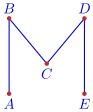
ហៅថា ប្រវែងខ្សែកាច់ ។
ឧទាហរណ៍ 2 ៖ រកប្រវែងជុំវិញពហុកោណ \(\displaystyle ABCDEFGH\) ។
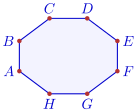
ហៅថា បរិមាត្រ ពហុកោណ \(\displaystyle ABCDEFGH\) ។
បរិមាត្រពហុកោណ គឺជាប្រវែងខ្សែកាច់បិទជិតដែលកំណត់ពហុកោណនោះ ។
គណនាបរិមាត្រពហុកោណរូបខាងក្រោម ។
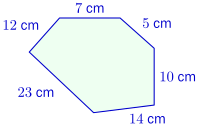
បរិមាត្រពហុកោណ ៖
ដូច្នេះបរិមាត្រពហុកោណគឺ \(\displaystyle P=71~\text{cm}\) ។
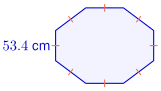
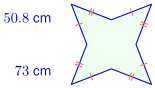
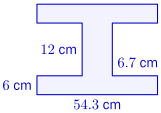
រកបរិមាត្រពហុកោណខាងក្រោម ៖
មើលចម្លើយ
- ក.
ពហុកោណមាន \(\displaystyle 8\) ជ្រុងស្មើគ្នា (មានសញ្ញាដូចគ្នា) ជ្រុងមួយ \(\displaystyle 53.4~\text{cm}\) ៖
\[P=8\times53.4=427.2~\text{cm}\] - ខ.
ផ្កាយមាន \(\displaystyle 8\) ជ្រុង ដែលជ្រុងចំនួន \(\displaystyle 4\) ប្រវែង \(\displaystyle 50.8~\text{cm}\) និងជ្រុងចំនួន \(\displaystyle 4\) ប្រវែង \(\displaystyle 73~\text{cm}\) ៖
\[\begin{aligned} P &= 4\times50.8+4\times73 \\ &= 203.2+292 \\ &= 495.2~\text{cm} \end{aligned}\] - គ.
តាមសញ្ញាដូចគ្នា ជ្រុង \(\displaystyle 54.3~\text{cm}\) មាន \(\displaystyle 2\) ជ្រុង ជ្រុង \(\displaystyle 6~\text{cm}\) មាន \(\displaystyle 4\) ជ្រុង ជ្រុង \(\displaystyle 6.7~\text{cm}\) មាន \(\displaystyle 4\) ជ្រុង និងជ្រុង \(\displaystyle 12~\text{cm}\) មាន \(\displaystyle 2\) ជ្រុង ៖
\[\begin{aligned} P &= 2\times54.3+4\times6+4\times6.7+2\times12 \\ &= 108.6+24+26.8+24 \\ &= 183.4~\text{cm} \end{aligned}\]
ដូចនេះ ក. \(\displaystyle 427.2~\text{cm}\) ខ. \(\displaystyle 495.2~\text{cm}\) គ. \(\displaystyle 183.4~\text{cm}\) ។
1.2. បរិមាត្រចតុកោណកែង
ឧទាហរណ៍ 1 ៖ គណនាបរិមាត្រចតុកោណកែងក្នុងរូបខាងក្រោម ។
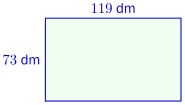
បរិមាត្រចតុកោណកែងគឺ
ឧទាហរណ៍ 2 ៖ គណនាបរិមាត្រចតុកោណកែងមានវិមាត្រ \(\displaystyle a\) និង \(\displaystyle b\) ។
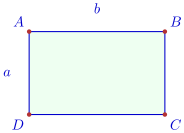
បរិមាត្រចតុកោណកែង \(\displaystyle ABCD\) គឺ
រូបមន្ត បរិមាត្រចតុកោណកែង គឺជា \(\displaystyle P=2(a+b)\) ដែល \(\displaystyle a\) ជាប្រវែងទទឹង និង \(\displaystyle b\) ជាប្រវែងបណ្តោយ ។
ចម្ការស្វាយមួយរាងចតុកោណកែងមានបរិមាត្រ \(\displaystyle 424~\text{m}\) និងទទឹងស្មើ \(\displaystyle 15.50~\text{m}\) ។ គណនាបណ្តោយចម្ការស្វាយនោះ ។
បរិមាត្រចម្ការស្វាយ \(\displaystyle P=2(a+b)\) នាំឱ្យ \(\displaystyle b=\dfrac{P}{2}-a\) ។ ដោយ \(\displaystyle P=424~\text{m}\), \(\displaystyle a=15.50~\text{m}\) គេបាន
ដូច្នេះបណ្តោយចម្ការស្វាយគឺ \(\displaystyle b=196.5~\text{m}\) ។
ដីស្រែមួយរាងចតុកោណកែងមានវិមាត្រស្មើនឹង \(\displaystyle 55~\text{m}\) និង \(\displaystyle 107~\text{m}\) ។ គណនាបរិមាត្រដីស្រែនោះ ។
មើលចម្លើយ
ដូចនេះ \(\displaystyle 324~\text{m}\) ។
1.3. បរិមាត្រការ៉េ
ឧទាហរណ៍ 1 ៖ គណនាបរិមាត្រការ៉េមានរង្វាស់ជ្រុងស្មើនឹង \(\displaystyle 27~\text{cm}\) ។
បរិមាត្រការ៉េគឺ
ឧទាហរណ៍ 2 ៖ គណនាបរិមាត្រការ៉េ តាមរូបខាងក្រោម ៖
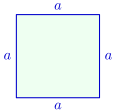
បរិមាត្រការ៉េគឺ \(\displaystyle P=a+a+a+a=4a\) ។
រូបមន្ត បរិមាត្រការ៉េ គឺ \(\displaystyle P=4a\) ដែល \(\displaystyle a\) ជាជ្រុងការ៉េ ។
លំហាត់គំរូ 1 ៖ ស្រះចិញ្ចឹមត្រីមួយរាងការ៉េមានរង្វាស់ជ្រុងស្មើនឹង \(\displaystyle 18~\text{m}\) ។ គណនាបរិមាត្រស្រះនោះ ។
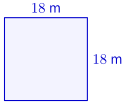
ដំណោះស្រាយ
ដូច្នេះ \(\displaystyle P=72~\text{m}\) ។
លំហាត់គំរូ 2 ៖ ចម្ការពោតមួយរាងការ៉េ ។ គេធ្វើរបងព័ទ្ធខ្សែលួស \(\displaystyle 3\) ជុំអស់លួសប្រវែង \(\displaystyle 864~\text{m}\) ។
- ក. គណនាបរិមាត្រចម្ការពោត
- ខ. គណនាប្រវែងជ្រុងចម្ការពោត ។
ដំណោះស្រាយ
- ក.
បរិមាត្រចម្ការពោតស្មើនឹងប្រវែងខ្សែលួស \(\displaystyle 1\) ជុំ ៖
\[P=\frac{864}{3}=288~\text{m}\] - ខ.
ប្រវែងជ្រុងចម្ការពោត ៖
\[a=\frac{288~\text{m}}{4}=72~\text{m}\]
ដូច្នេះបរិមាត្រចម្ការពោត \(\displaystyle P=288~\text{m}\) និងជ្រុងចម្ការពោត \(\displaystyle a=72~\text{m}\) ។
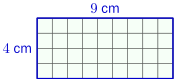
សុខាមានក្រដាសមួយសន្លឹកដូចរូបខាងក្រោម ។ តើសុខាត្រូវកាត់ក្រដាសតាមរបៀបណាដើម្បីផ្គុំបានជាការ៉េ ? គណនាបរិមាត្រនៃការ៉េដែលផ្គុំបាន ។
មើលចម្លើយ
ក្រដាសមានផ្ទៃក្រឡា \(\displaystyle 9\times4=36~\text{cm}^2\) ។ ការ៉េដែលផ្គុំបានមានផ្ទៃក្រឡា \(\displaystyle 36~\text{cm}^2\) ដូចនេះជ្រុងរបស់វា \(\displaystyle 6~\text{cm}\) ។
កាត់ក្រដាសជាពីរផ្នែកតាមជណ្តើរ (\(\displaystyle 3\) ជាន់ ដែលជាន់នីមួយៗទទឹង \(\displaystyle 3~\text{cm}\) និងកម្ពស់ \(\displaystyle 2~\text{cm}\)) ដូចរូប រួចរំកិលផ្នែកខាងស្តាំឡើងលើ \(\displaystyle 2~\text{cm}\) និងទៅឆ្វេង \(\displaystyle 3~\text{cm}\) ។
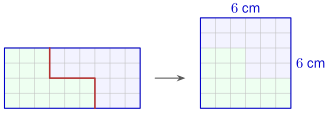
ដូចនេះ ផ្គុំជាការ៉េដែលមានជ្រុង \(\displaystyle 6~\text{cm}\) និង \(\displaystyle P=24~\text{cm}\) ។
1.4. បរិមាត្រត្រីកោណ
ឧទាហរណ៍ 1 ៖ គណនាបរិមាត្រត្រីកោណមានរង្វាស់ជ្រុងដូចក្នុងរូបខាងក្រោម ។
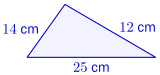
ប្រវែងបរិមាត្រត្រីកោណគឺ
ឧទាហរណ៍ 2 ៖ គណនាបរិមាត្រត្រីកោណដែលមានរង្វាស់ជ្រុងដូចរូបខាងក្រោម ។
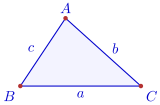
ប្រវែងបរិមាត្រត្រីកោណគឺ \(\displaystyle P_{\Delta ABC}=a+b+c\) ។
រូបមន្ត បរិមាត្រត្រីកោណមានរង្វាស់ជ្រុង \(\displaystyle a,b,c\) គឺ \(\displaystyle P=a+b+c\) ។
គណនាបរិមាត្រត្រីកោណសមបាត \(\displaystyle ABC\) ដោយស្គាល់រង្វាស់ជ្រុង \(\displaystyle AB=AC=27~\text{cm}\), \(\displaystyle BC=21~\text{cm}\) ។
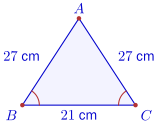
បរិមាត្រត្រីកោណសមបាត \(\displaystyle ABC\) ៖
ដូច្នេះ \(\displaystyle P=75~\text{cm}\) ។
គណនាបរិមាត្រត្រីកោណ \(\displaystyle ABC\) ។
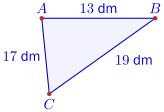
មើលចម្លើយ
ដូចនេះ \(\displaystyle 49~\text{dm}\) ។
2. ផ្ទៃក្រឡាពហុកោណ
2.1. សញ្ញាណផ្ទៃនិងផ្ទៃក្រឡា
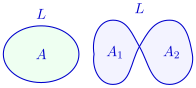
ឧទាហរណ៍ 1 ៖ ខ្សែកោង \(\displaystyle L\) បិទជិតបង្កើតបានផ្ទៃ \(\displaystyle A\) មួយ ។ ខ្សែកោង \(\displaystyle L\) ដែលត្រឡប់កាត់ខ្លួនឯង ពុំអាចកំណត់បានផ្ទៃតែមួយទេ ។
ឧទាហរណ៍ 2 ៖ រូបទី \(\displaystyle 1\) និងរូបទី \(\displaystyle 2\) ជាផ្ទៃពីរមានរាងខុសគ្នា តែវាមាន \(\displaystyle 10\) ការ៉ូដូចគ្នា ។ ដូច្នេះគេថាផ្ទៃរូបទី \(\displaystyle 1\) និងផ្ទៃរូបទី \(\displaystyle 2\) មានផ្ទៃក្រឡាស្មើគ្នា ។ បើគេយកការ៉េរូបទី \(\displaystyle 3\) ជាការ៉េឯកតាផ្ទៃ នោះផ្ទៃក្រឡារូបទី \(\displaystyle 1\) និងរូបទី \(\displaystyle 2\) ស្មើនឹង \(\displaystyle 10\) ឯកតាផ្ទៃដូចគ្នា ។
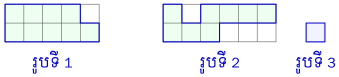
ផ្ទៃក្រឡា គឺជាចំនួននៃការ៉េឯកតាដែលនៅក្នុងផ្ទៃ ។
2.2. ឯកតាផ្ទៃក្រឡា
ឧទាហរណ៍ 1 ៖ បើគេវាស់ជ្រុងនៃបន្ទប់រៀនដោយយកឯកតាខ្នាតជាម៉ែត្រ (\(\displaystyle \text{m}\)) នោះឯកតាផ្ទៃក្រឡាជាម៉ែត្រការ៉េ (\(\displaystyle \text{m}^2\)) ។ ឯកតាផ្ទៃ មានដូចតារាងខាងក្រោម ៖
| ប្រវែងជ្រុង | \(\displaystyle 1~\text{km}\) | \(\displaystyle 1~\text{hm}\) | \(\displaystyle 1~\text{dam}\) | \(\displaystyle 1~\text{m}\) | \(\displaystyle 1~\text{dm}\) | \(\displaystyle 1~\text{cm}\) | \(\displaystyle 1~\text{mm}\) |
| ឯកតាផ្ទៃ | \(\displaystyle 1~\text{km}^2\) | \(\displaystyle 1~\text{hm}^2\) | \(\displaystyle 1~\text{dam}^2\) | \(\displaystyle 1~\text{m}^2\) | \(\displaystyle 1~\text{dm}^2\) | \(\displaystyle 1~\text{cm}^2\) | \(\displaystyle 1~\text{mm}^2\) |
ខ្នាតផ្ទៃក្រឡា គឺម៉ែត្រការ៉េ (\(\displaystyle \text{m}^2\)) ។ ម៉ែត្រការ៉េ គឺជាផ្ទៃក្រឡានៃការ៉េដែលជ្រុងមានរង្វាស់ស្មើនឹង \(\displaystyle 1~\text{m}\) ។
ដើម្បីវាស់ដីស្រែចម្ការ គេច្រើនប្រើខ្នាតរង្វាស់ដូចជា សង់ទីអា (\(\displaystyle \text{ca}\)), អា (\(\displaystyle \text{a}\)), ហិកតា (\(\displaystyle \text{ha}\)) ។
បំពេញចន្លោះខាងក្រោម ៖
- ក. \(\displaystyle 3~\text{m}^2=\dots\dots~\text{cm}^2\)
- ខ. \(\displaystyle 1~\text{a}=\dots\dots~\text{m}^2\)
- គ. \(\displaystyle 500~\text{cm}^2=\dots\dots~\text{m}^2\) ។
មើលចម្លើយ
- ក.
\(\displaystyle 1~\text{m}=100~\text{cm}\) ដូចនេះ \(\displaystyle 1~\text{m}^2=100\times100=10~000~\text{cm}^2\) ៖
\[3~\text{m}^2=3\times10~000=30~000~\text{cm}^2\] - ខ.
គេបាន ៖
\[1~\text{a}=1~\text{dam}^2=10\times10=100~\text{m}^2\] - គ.
\(\displaystyle 1~\text{cm}^2=\dfrac{1}{10~000}~\text{m}^2\) ដូចនេះ ៖
\[500~\text{cm}^2=\frac{500}{10~000}=0.05~\text{m}^2\]
2.3. ផ្ទៃក្រឡាចតុកោណកែង
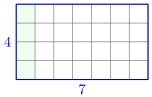
ឧទាហរណ៍ 1 ៖ គណនាផ្ទៃក្រឡាចតុកោណកែងខាងក្រោម ។ ចតុកោណកែងមានជួរឈរ \(\displaystyle 4\) ការ៉ូ និងជួរដេក \(\displaystyle 7\) ការ៉ូ ។
គេបាន
ដូច្នេះផ្ទៃក្រឡាចតុកោណកែង គឺ \(\displaystyle \mathcal{A}=28\) ការ៉ូ ។
ឧទាហរណ៍ 2 ៖ គណនាផ្ទៃក្រឡាចតុកោណកែងដែលមានរង្វាស់ជ្រុង \(\displaystyle a=6~\text{cm}\), \(\displaystyle b=3~\text{cm}\) ។
ផ្ទៃក្រឡាចតុកោណកែង \(\displaystyle =\underbrace{6+6+6}_{3\text{ ដង}}=18\) ការ៉ូ ។ ឬ \(\displaystyle 3~\text{cm}\times6~\text{cm}=18~\text{cm}^2\) គេបាន \(\displaystyle \mathcal{A}=a\times b\) ។
ដូច្នេះផ្ទៃក្រឡាចតុកោណកែង គឺ \(\displaystyle \mathcal{A}=18~\text{cm}^2\) ។
រូបមន្ត ផ្ទៃក្រឡាចតុកោណកែង គឺ \(\displaystyle \mathcal{A}=a\times b\) ឬ បណ្តោយ \(\displaystyle \times\) ទទឹង ។
លំហាត់គំរូ 1 ៖ គណនាផ្ទៃក្រឡាចតុកោណកែង \(\displaystyle ABCD\) ដោយស្គាល់រង្វាស់ជ្រុង \(\displaystyle AB=130~\text{dm}\) និង \(\displaystyle AD=117~\text{dm}\) ។
ដំណោះស្រាយ ផ្ទៃក្រឡាចតុកោណកែង \(\displaystyle ABCD\) ៖
ដូច្នេះ \(\displaystyle \mathcal{A}=15~210~\text{dm}^2\) ។
លំហាត់គំរូ 2 ៖ គណនាជ្រុងចតុកោណកែង \(\displaystyle ABCD\) ដោយស្គាល់ \(\displaystyle AB=207~\text{cm}\) និង \(\displaystyle \mathcal{A}=14~076~\text{cm}^2\) ។
ដំណោះស្រាយ តាង \(\displaystyle x\) ជាជ្រុងចតុកោណកែង \(\displaystyle ABCD\) ដែលត្រូវរក ៖
ដូច្នេះរង្វាស់ជ្រុងចតុកោណកែង គឺ \(\displaystyle 68~\text{cm}\) ។
បំពេញចន្លោះក្នុងតារាងខាងក្រោម ៖
| ចតុកោណកែង | ជ្រុងទី \(\displaystyle 1\) | ជ្រុងទី \(\displaystyle 2\) | ផ្ទៃក្រឡា | បរិមាត្រ |
| ទី \(\displaystyle 1\) | \(\displaystyle 25~\text{cm}\) | \(\displaystyle \dots\dots~\text{cm}\) | \(\displaystyle 300~\text{cm}^2\) | \(\displaystyle \dots\dots~\text{cm}\) |
| ទី \(\displaystyle 2\) | \(\displaystyle \dots\dots~\text{dm}\) | \(\displaystyle 24~\text{dm}\) | \(\displaystyle \dots\dots~\text{dm}^2\) | \(\displaystyle 120~\text{dm}\) |
| ទី \(\displaystyle 3\) | \(\displaystyle 10~\text{m}\) | \(\displaystyle 7~\text{m}\) | \(\displaystyle 70~\text{m}^2\) | \(\displaystyle \dots\dots~\text{m}\) |
| ទី \(\displaystyle 4\) | \(\displaystyle 1224~\text{mm}\) | \(\displaystyle 1222~\text{mm}\) | \(\displaystyle \dots\dots~\text{mm}^2\) | \(\displaystyle \dots\dots~\text{mm}\) |
មើលចម្លើយ
- ទី 1.
គេបាន ៖
\[\begin{aligned} \text{ជ្រុងទី }2 &= \frac{300}{25}=12~\text{cm} \\ P &= 2(25+12)=74~\text{cm} \end{aligned}\] - ទី 2.
គេបាន ៖
\[\begin{aligned} \text{ជ្រុងទី }1 &= \frac{120}{2}-24=60-24=36~\text{dm} \\ \mathcal{A} &= 36\times24=864~\text{dm}^2 \end{aligned}\] - ទី 3.
គេបាន ៖
\[P=2(10+7)=34~\text{m}\] - ទី 4.
គេបាន ៖
\[\begin{aligned} \mathcal{A} &= 1224\times1222=1~495~728~\text{mm}^2 \\ P &= 2(1224+1222)=4~892~\text{mm} \end{aligned}\]
2.4. ផ្ទៃក្រឡាការ៉េ
ឧទាហរណ៍ 1 ៖ គណនាផ្ទៃក្រឡាការ៉េខាងក្រោម ។
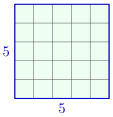
ការ៉េមានផ្ទៃក្រឡា \(\displaystyle \mathcal{A}=5\times5=5^2=25\) ។ ដូច្នេះការ៉េមានផ្ទៃក្រឡា \(\displaystyle \mathcal{A}=25\) ឯកតាការ៉េ ។
ឧទាហរណ៍ 2 ៖ គណនាផ្ទៃក្រឡាការ៉េ ដោយស្គាល់រង្វាស់ជ្រុង \(\displaystyle a=6~\text{cm}\) ។
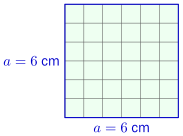
ផ្ទៃក្រឡាការ៉េ \(\displaystyle =6\times6=6^2=36\) ឬ \(\displaystyle \mathcal{A}=a\times a=a^2\) ។ ដូច្នេះផ្ទៃក្រឡាការ៉េគឺ \(\displaystyle \mathcal{A}=36~\text{cm}^2\) ។
រូបមន្ត ផ្ទៃក្រឡាការ៉េ គឺ \(\displaystyle \mathcal{A}=a^2\) ដែល \(\displaystyle a\) ជាជ្រុង ។
សូផាតធ្វើដំណើរទៅកម្សាន្តចម្ការកៅស៊ូមួយដែលមានរាងជាការ៉េ ពេលទៅដល់គាត់ឃើញស្លាកសញ្ញាមានមាត្រដ្ឋាន \(\displaystyle \dfrac{1}{100~000}\) និងមានបរិមាត្រ \(\displaystyle 2.96~\text{cm}\) ។
- ក. គណនាផ្ទៃក្រឡាដីពិតរបស់ចម្ការកៅស៊ូគិតជាហិកតា ។
- ខ. គណនាប្រវែងខ្សែលួស បើគេព័ទ្ធចម្ការនោះ \(\displaystyle 6\) ជុំ ។
- គ. គណនាតម្លៃខ្សែលួស បើក្នុង \(\displaystyle 1~\text{m}\) ថ្លៃ \(\displaystyle 900~\text{៛}\) ។
មាត្រដ្ឋាន \(\displaystyle 1:100~000\) មានន័យថាប្រវែង \(\displaystyle 1~\text{cm}\) នៅលើផែនទីតាងឱ្យ \(\displaystyle 100~000~\text{cm}\) ឬ \(\displaystyle 1~000~\text{m}\) នៅលើផ្ទៃដីពិត ។ បើ \(\displaystyle a\) ជាជ្រុងនៃចម្ការកៅស៊ូ គេបាន
- ក.
ផ្ទៃក្រឡាចម្ការកៅស៊ូ ៖
\[\begin{aligned} \mathcal{A} &= a^2=(740~\text{m})^2 \\ &= 547~600~\text{m}^2 \\ &= 54.76~\text{ha} \end{aligned}\] - ខ.
ប្រវែងខ្សែលួស ៖
\[L=2~960~\text{m}\times6=17~760~\text{m}\] - គ.
តម្លៃខ្សែលួសទាំងអស់ ៖
\[M=900~\text{៛}\times17~760=15~984~000~\text{៛}\]
ដូច្នេះ \(\displaystyle \mathcal{A}=54.76~\text{ha}\), \(\displaystyle L=17~760~\text{m}\), \(\displaystyle M=15~984~000~\text{៛}\) ។
សង់ការ៉េមួយមានបរិមាត្រ \(\displaystyle 172~\text{cm}\) ។ គណនាផ្ទៃក្រឡាការ៉េនេះ ។
មើលចម្លើយ
ដូចនេះ \(\displaystyle 1~849~\text{cm}^2\) ។
2.5. ផ្ទៃក្រឡាត្រីកោណ
ឧទាហរណ៍ 1 ៖ គណនាផ្ទៃក្រឡាត្រីកោណ រូបទី \(\displaystyle 1\) ។
តាមរូបត្រីកោណ គេរាប់ឃើញមានការ៉ូពេញចំនួន \(\displaystyle 12\) ឯកតា និងការ៉ូមិនពេញចំនួន \(\displaystyle 8\) ឯកតា គឺមាន \(\displaystyle \dfrac{8}{2}=4\) ការ៉ូពេញ ។ ដូច្នេះ ៖
ឧទាហរណ៍ 2 ៖ គណនាផ្ទៃក្រឡាត្រីកោណ \(\displaystyle ABC\) ។
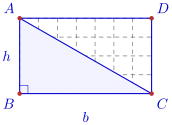
ផ្ទៃក្រឡាចតុកោណកែង \(\displaystyle ABCD\) ៖
ផ្ទៃក្រឡាត្រីកោណស្មើពាក់កណ្តាលនៃ \(\displaystyle \mathcal{A}_{ABCD}\) ៖
គេបាន \(\displaystyle \mathcal{A}_{ABC}=\dfrac{1}{2}bh\) ។
រូបមន្ត ផ្ទៃក្រឡាត្រីកោណ គឺ \(\displaystyle \mathcal{A}=\dfrac{1}{2}bh\) ដែល \(\displaystyle b\) ជាបាតនិង \(\displaystyle h\) ជាកម្ពស់ ។
លំហាត់គំរូ 1 ៖ គណនាផ្ទៃក្រឡាត្រីកោណសមបាតខាងក្រោម ។
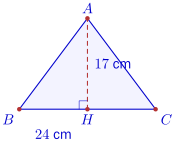
ដំណោះស្រាយ
ដូច្នេះ \(\displaystyle \mathcal{A}=204~\text{cm}^2\) ។
លំហាត់គំរូ 2 ៖ គណនាកម្ពស់ត្រីកោណមួយដោយស្គាល់ផ្ទៃក្រឡា \(\displaystyle \mathcal{A}=132~\text{dm}^2\) និងបាត \(\displaystyle a=34~\text{dm}\) ។
ដំណោះស្រាយ តាមរូបមន្តគេបាន \(\displaystyle \mathcal{A}=\dfrac{1}{2}a\times h\) នាំឱ្យ \(\displaystyle h=\dfrac{2\mathcal{A}}{a}\) ។
ដូច្នេះ \(\displaystyle h=7.76~\text{dm}\) ។
បំពេញតារាងខាងក្រោម ៖
| ត្រីកោណ | ជ្រុងទី \(\displaystyle 1\) | ជ្រុងទី \(\displaystyle 2\) | បាត | កម្ពស់ | ផ្ទៃក្រឡា | បរិមាត្រ |
| ទី \(\displaystyle 1\) | \(\displaystyle 10~\text{cm}\) | (1) \(\displaystyle \dots\) | \(\displaystyle 16~\text{cm}\) | \(\displaystyle 8~\text{cm}\) | (2) \(\displaystyle \dots\) | \(\displaystyle 40~\text{cm}\) |
| ទី \(\displaystyle 2\) | \(\displaystyle 20~\text{cm}\) | \(\displaystyle 20~\text{cm}\) | (3) \(\displaystyle \dots\) | (4) \(\displaystyle \dots\) | \(\displaystyle 192~\text{cm}^2\) | \(\displaystyle 72~\text{cm}\) |
មើលចម្លើយ
- (1)
ជ្រុងទី \(\displaystyle 2=P-\) ជ្រុងទី \(\displaystyle 1-\) បាត ៖
\[40-10-16=14~\text{cm}\] - (2)
គេបាន ៖
\[\mathcal{A}=\frac{1}{2}\times16\times8=64~\text{cm}^2\] - (3)
ត្រីកោណទី \(\displaystyle 2\) មានបាត \(\displaystyle =P-20-20\) ៖
\[72-20-20=32~\text{cm}\] - (4)
គេបាន ៖
\[\begin{aligned} \mathcal{A} &= \frac{1}{2}\times32\times h=192 \\ h &= \frac{2\times192}{32}=12~\text{cm} \end{aligned}\]
ដូចនេះ (1) \(\displaystyle 14~\text{cm}\) (2) \(\displaystyle 64~\text{cm}^2\) (3) \(\displaystyle 32~\text{cm}\) (4) \(\displaystyle 12~\text{cm}\) ។
3. ចំណោទ
ឧទាហរណ៍ ៖ ចម្ការកប្បាសមួយមានរាងចតុកោណកែងដោយស្គាល់បរិមាត្រ \(\displaystyle 520~\text{m}\) ហើយទទឹងខ្លីជាងបណ្តោយ \(\displaystyle 25~\text{m}\) ។ រកផ្ទៃក្រឡាចម្ការកប្បាស ។
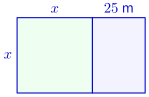
តាង \(\displaystyle x\) ជាទទឹងចម្ការ គេបានបណ្តោយចម្ការគឺ \(\displaystyle x+25\) ។
ដូច្នេះផ្ទៃក្រឡាចម្ការកប្បាស \(\displaystyle \mathcal{A}=16~743.75~\text{m}^2\) ។
គណនាផ្ទៃក្រឡារូបខាងក្រោម ។
ដូច្នេះផ្ទៃក្រឡា \(\displaystyle \mathcal{A}=528~\text{cm}^2\) ។
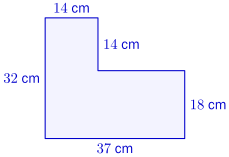
គណនាផ្ទៃក្រឡាតាមរូបខាងក្រោម ។
មើលចម្លើយ
ចែករូបជាចតុកោណកែងពីរ ៖ ចតុកោណកែងឈរ \(\displaystyle 14~\text{cm}\times32~\text{cm}\) និងចតុកោណកែងដេកខាងស្តាំ \(\displaystyle (37-14)~\text{cm}\times18~\text{cm}\) ៖
ដូចនេះ \(\displaystyle 862~\text{cm}^2\) ។
លំហាត់
សង់ចតុកោណកែងមួយដោយស្គាល់រង្វាស់វិមាត្រទាំងពីរ \(\displaystyle 20~\text{cm}\) និង \(\displaystyle 14~\text{cm}\) ។ គណនាបរិមាត្រនិងផ្ទៃក្រឡាចតុកោណនោះ ។
មើលដំណោះស្រាយ
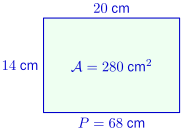 \[\begin{aligned} P &= 2(20+14)=2\times34=68~\text{cm} \\ \mathcal{A} &= 20\times14=280~\text{cm}^2 \end{aligned}\]
ដូចនេះ \(\displaystyle P=68~\text{cm}\) និង \(\displaystyle \mathcal{A}=280~\text{cm}^2\) ។
សង់ការ៉េមួយដោយស្គាល់បរិមាត្រ \(\displaystyle 120~\text{mm}\) ។ គណនាជ្រុងនិងផ្ទៃក្រឡាការ៉េនោះ ។
មើលដំណោះស្រាយ
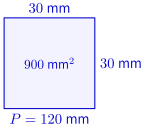 \[\begin{aligned} a &= \frac{P}{4}=\frac{120}{4}=30~\text{mm} \\ \mathcal{A} &= a^2=30^2=900~\text{mm}^2 \end{aligned}\]
ដូចនេះ ជ្រុង \(\displaystyle 30~\text{mm}\) និងផ្ទៃក្រឡា \(\displaystyle 900~\text{mm}^2\) ។
រកកម្ពស់ត្រីកោណមួយដោយស្គាល់ផ្ទៃក្រឡា \(\displaystyle 49~\text{cm}^2\) និងបាតស្មើ \(\displaystyle 12~\text{cm}\) ។
មើលដំណោះស្រាយ
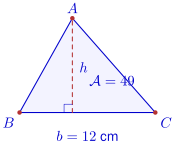 \[\begin{aligned} \mathcal{A} &= \frac{1}{2}b\times h \\ h &= \frac{2\mathcal{A}}{b}=\frac{2\times49}{12} \\ &= \frac{49}{6}\approx8.17~\text{cm} \end{aligned}\]
ដូចនេះ កម្ពស់ \(\displaystyle h=\dfrac{49}{6}\approx8.17~\text{cm}\) ។
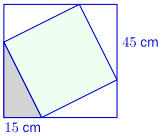
គណនាផ្ទៃក្រឡាការ៉េតូចនៅក្នុងការ៉េធំ (រូបខាងក្រោម) ។
មើលដំណោះស្រាយ
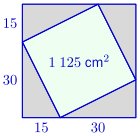
ការ៉េធំមានជ្រុង \(\displaystyle 45~\text{cm}\) ។ ត្រីកោណកែងបួនស្មើគ្នានៅជ្រុងទាំងបួន មានជ្រុងកែង \(\displaystyle 15~\text{cm}\) និង \(\displaystyle 45-15=30~\text{cm}\) ។
\[\begin{aligned} \mathcal{A}_{\text{ការ៉េធំ}} &= 45^2=2~025~\text{cm}^2 \\ \mathcal{A}_{\text{ត្រីកោណមួយ}} &= \frac{1}{2}\times15\times30=225~\text{cm}^2 \\ \mathcal{A}_{\text{ការ៉េតូច}} &= 2~025-4\times225 \\ &= 2~025-900 \\ &= 1~125~\text{cm}^2 \end{aligned}\]ដូចនេះ ផ្ទៃក្រឡាការ៉េតូចស្មើ \(\displaystyle 1~125~\text{cm}^2\) ។
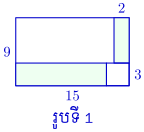
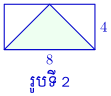
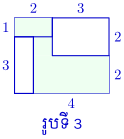
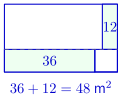
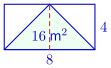
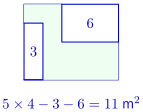
រកផ្ទៃក្រឡាផ្នែកពណ៌នៃរូបខាងក្រោម ។ (ឯកតាគិតជា \(\displaystyle \text{m}\))
មើលដំណោះស្រាយ
- រូបទី 1.
ចតុកោណកែងធំ \(\displaystyle 15\times9\) ។ ផ្នែកខាងស្តាំមានការ៉េស \(\displaystyle 3\times3\) នៅផ្នែកក្រោម ។ ផ្នែកពណ៌ក្នុងជួរខាងលើ (កម្ពស់ \(\displaystyle 9-3=6\)) ទទឹង \(\displaystyle 2\) ហើយក្នុងជួរខាងក្រោម (កម្ពស់ \(\displaystyle 3\)) ទទឹង \(\displaystyle 15-3=12\) ៖
\[\begin{aligned} \mathcal{A} &= 2\times6+12\times3 \\ &= 12+36 \\ &= 48~\text{m}^2 \end{aligned}\] - រូបទី 2.
ត្រីកោណពណ៌មានបាត \(\displaystyle 8\) និងកម្ពស់ \(\displaystyle 4\) ៖
\[\mathcal{A}=\frac{1}{2}\times8\times4=16~\text{m}^2\] - រូបទី 3.
ចតុកោណកែងធំមានទទឹង \(\displaystyle 2+3=5\) និងកម្ពស់ \(\displaystyle 1+3=4\) ។ ដកផ្នែកស ៖ ចតុកោណកែងស្តើង \(\displaystyle 1\times3\) និងចតុកោណកែងខាងលើស្តាំ \(\displaystyle 3\times2\) ៖
\[\begin{aligned} \mathcal{A} &= 5\times4-1\times3-3\times2 \\ &= 20-3-6 \\ &= 11~\text{m}^2 \end{aligned}\]
- រូបទី 1.
តាមមាត្រដ្ឋាន \(\displaystyle \dfrac{1}{200}\) ផែនទីសួនមួយរាងការ៉េមានរង្វាស់ជ្រុង \(\displaystyle 7.9~\text{dm}\) ។
- ក. គណនាផ្ទៃក្រឡាសួននោះនៅលើផែនទីគិតជា \(\displaystyle \text{dm}^2\) ។
- ខ. តើផ្ទៃក្រឡាសួនពិតនៅលើផ្ទៃដីមានប៉ុន្មានអា ?
មើលដំណោះស្រាយ
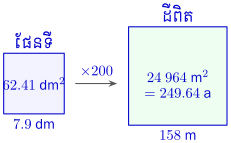
- ក.
គេបាន ៖
\[\mathcal{A}_{\text{ផែនទី}}=7.9^2=62.41~\text{dm}^2\] - ខ.
ជ្រុងពិត \(\displaystyle =200\times7.9~\text{dm}=1~580~\text{dm}=158~\text{m}\) ៖
\[\begin{aligned} \mathcal{A}_{\text{ពិត}} &= 158^2=24~964~\text{m}^2 \\ &= 249.64~\text{a} \end{aligned}\]
ដូចនេះ ក. \(\displaystyle 62.41~\text{dm}^2\) ខ. \(\displaystyle 249.64~\text{a}\) ។
ផ្ទៃការ៉េប្រាំខាងក្រោមផ្តុំបានជាការ៉េមួយ ។ រកផ្ទៃក្រឡារបស់ការ៉េនោះ បើគេយកមួយការ៉ូឯកតាស្មើនឹង \(\displaystyle 1~\text{ca}\) ។

មើលដំណោះស្រាយ
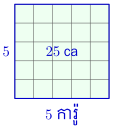
រាប់ការ៉ូនៃផ្នែកនីមួយៗ ៖ \(\displaystyle 4+5+8+3+5=25\) ការ៉ូ ។
\[25\times1~\text{ca}=25~\text{ca}\]ការ៉េដែលផ្តុំបានមានជ្រុង \(\displaystyle 5\) ការ៉ូ (\(\displaystyle 5\times5=25\)) ។ ដូចនេះ ផ្ទៃក្រឡាការ៉េនោះស្មើ \(\displaystyle 25~\text{ca}\) \(\displaystyle (=25~\text{m}^2)\) ។
ចម្ការចតុកោណកែងមួយមានបរិមាត្រ \(\displaystyle 500~\text{m}\) ហើយទទឹងមានប្រវែង \(\displaystyle \dfrac{1}{4}\) នៃបណ្តោយ ។ រកផ្ទៃក្រឡាចម្ការនោះ ។
មើលដំណោះស្រាយ
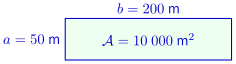
តាង \(\displaystyle b\) ជាបណ្តោយ នោះទទឹង \(\displaystyle a=\dfrac{b}{4}\) ។ កន្លះបរិមាត្រ \(\displaystyle a+b=\dfrac{500}{2}=250\) ៖
\[\begin{aligned} \frac{b}{4}+b &= 250 \\ \frac{5b}{4} &= 250 \\ b &= 250\times\frac{4}{5}=200~\text{m} \end{aligned}\]\[a=\frac{200}{4}=50~\text{m}\]\[\mathcal{A}=200\times50=10~000~\text{m}^2\]ដូចនេះ ផ្ទៃក្រឡាចម្ការ \(\displaystyle 10~000~\text{m}^2\) (\(\displaystyle =1~\text{ha}\)) ។
ដីស្រែមួយកន្លែងរាងត្រីកោណមានបាត \(\displaystyle 258~\text{m}\) និងកម្ពស់មានប្រវែង \(\displaystyle \dfrac{2}{3}\) នៃបាត ។ នៅក្នុងស្រែនោះគេជីកស្រះរាងចតុកោណកែងមានទទឹង \(\displaystyle 13~\text{m}\) និងបណ្តោយស្មើ \(\displaystyle \dfrac{1}{3}\) នៃកម្ពស់ត្រីកោណ ។
- ក. រកផ្ទៃក្រឡាស្រះ ។
- ខ. រកផ្ទៃក្រឡាដីស្រែដែលនៅសល់ពីជីកស្រះ ។
- គ. រកផលស្រូវទាំងអស់ បើក្នុងមួយហិកតាទទួលផលបាន \(\displaystyle 3\) តោន ។
មើលដំណោះស្រាយ
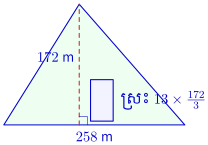
កម្ពស់ត្រីកោណ \(\displaystyle =\dfrac{2}{3}\times258=172~\text{m}\) ។
- ក.
បណ្តោយស្រះ \(\displaystyle =\dfrac{172}{3}~\text{m}\) ៖
\[\begin{aligned} \mathcal{A}_{\text{ស្រះ}} &= 13\times\frac{172}{3} \\ &= \frac{2~236}{3}\approx745.33~\text{m}^2 \end{aligned}\] - ខ.
ផ្ទៃក្រឡាដីស្រែទាំងមូល ៖
\[\mathcal{A}_{\text{ស្រែ}}=\frac{1}{2}\times258\times172=22~188~\text{m}^2\]\[\begin{aligned} \mathcal{A}_{\text{នៅសល់}} &= 22~188-\frac{2~236}{3} \\ &= \frac{64~328}{3}\approx21~442.67~\text{m}^2 \end{aligned}\] - គ.
ប្តូរជាហិកតា ៖ \(\displaystyle 21~442.67~\text{m}^2\approx2.1443~\text{ha}\) ។
\[\begin{aligned} \text{ផលស្រូវ} &= 2.1443\times3 \\ &\approx6.43~\text{តោន} \end{aligned}\]
ដូចនេះ ក. \(\displaystyle \approx745.33~\text{m}^2\) ខ. \(\displaystyle \approx21~442.67~\text{m}^2\) គ. \(\displaystyle \approx6.43\) តោន ។
ខ្លឹមសារ៖ សៀវភៅពុម្ពគណិតវិទ្យាថ្នាក់ទី៧ របស់ក្រសួងអប់រំ យុវជន និងកីឡា · វាយអត្ថបទ គូររូបភាពឡើងវិញ និងរៀបចំលើអនឡាញដោយលោកគ្រូ សាន សុខលី សម្រាប់ការសិក្សាដោយឥតគិតថ្លៃ និងមិនរកប្រាក់ចំណេញ។ មិនមែនជាការបោះពុម្ពផ្លូវការរបស់ក្រសួងទេ។